
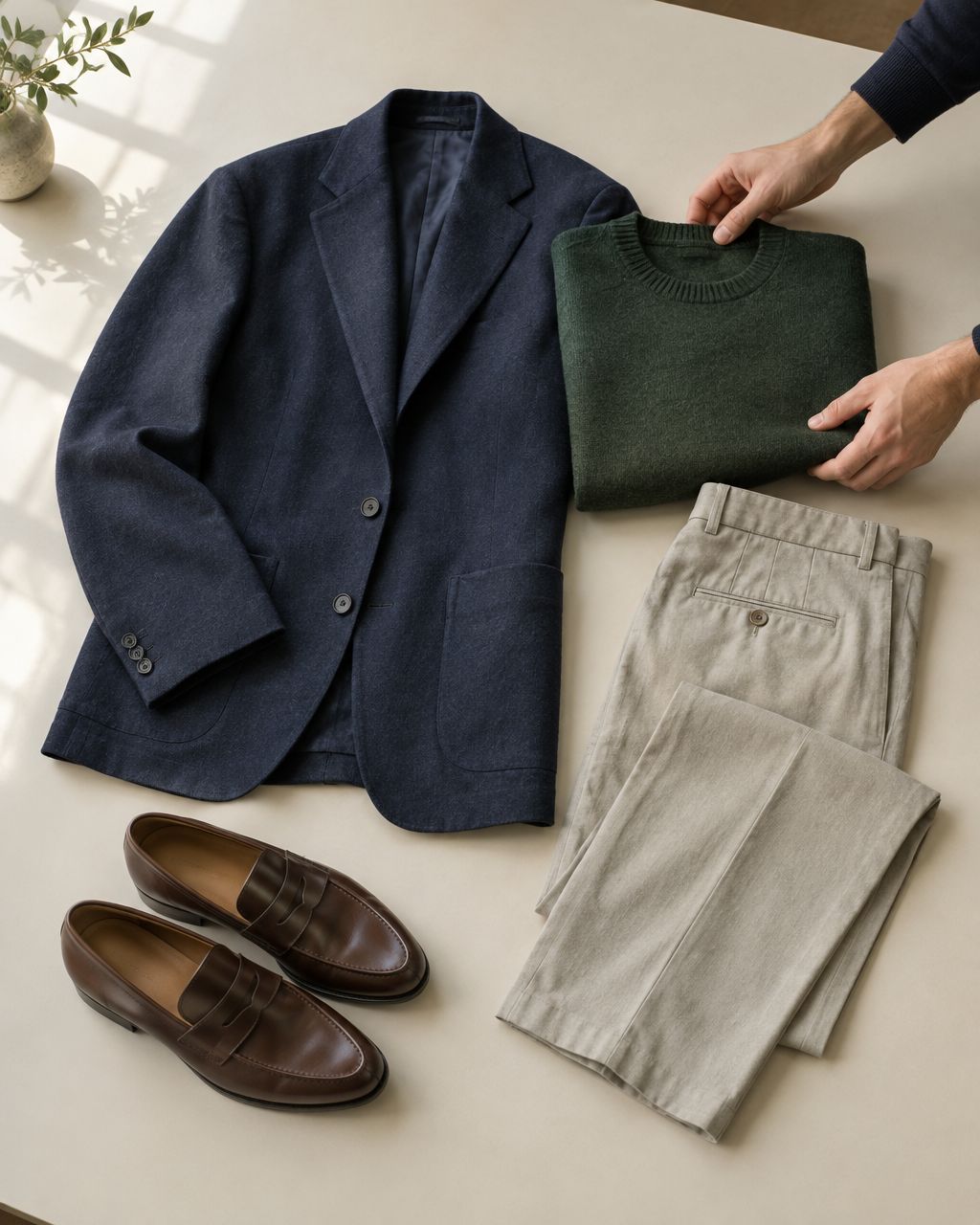
Evaluate Bayezon for intent-led outfit discovery, Nosto for dedicated shop-the-look bundles, Constructor for conversational outfit guidance, and Bloomreach Clarity for advice with complementary-product suggestions. For fashion teams comparing AI merchandising tools in 2026, a complete outfit should solve a shopper's stated occasion and preferences—not simply add more products to a page.
- Bayezon fits outfit discovery that connects product relationships, shopper intent and the wider storefront journey.
- Nosto explicitly documents shop-the-look bundles; Constructor and Bloomreach support relevant conversational guidance.
- Compare complements separately from substitutes, and measure basket quality alongside average order value.
Bayezon publishes this guide. Supplier capabilities were reviewed on October 22, 2026; the best-fit labels are use-case recommendations, not independent performance rankings.
This guide addresses supplier selection for coordinated products and outfits. The existing merchandising-software buying guide covers wider team requirements.
Why complete outfits deserve their own merchandising evaluation
A jacket with matching trousers is not the same recommendation problem as another jacket. One is a complement; the other is a substitute. Confusing them can make a product page look populated without helping the shopper complete a purchase.
Keep the outfit question distinct from generic ranking, campaign planning or checkout add-ons.
Your commercial objective might be higher average order value, more items per order or better discovery of complementary categories. Define it alongside the shopper's objective. A larger basket is not inherently a better basket if the suggestions are irrelevant or reduce contribution after returns.
What makes strong AI merchandising for outfits?
Start with these evaluation criteria:
- Relationship quality: can the system distinguish a complement from a similar alternative?
- Intent fit: do occasion, style and stated exclusions influence the outfit?
- Retailer ownership: can the merchandising team define and inspect important combinations?
- Refinement: can the shopper change one part without losing the rest of the mission?
- Placement: is the recommendation useful on the relevant listing, detail or guided-shopping surface?
- Commercial evidence: can your team connect the experience with completed orders rather than impressions alone?
A good implementation should not require every shopper to want a complete look. Sometimes the right answer is a single item or an alternative. Include that boundary in the evaluation rather than rewarding the system for adding products at every opportunity.
Outfit and complementary-product tools at a glance
| Platform | Best-fit evaluation | Documented approach | Boundary to test |
|---|---|---|---|
| Bayezon | Intent-led outfit discovery across the journey | Product Intelligence, guided selling and Agentic Storefront™ | Confirm exact merchant controls and deployment responsibilities |
| Nosto Dynamic Bundles | Dedicated shop-the-look merchandising | Manual, dynamic and AI-assisted complementary-product bundles | Determine whether bundle placement solves the whole buying problem |
| Constructor AI Shopping Agent | Conversational outfit and occasion guidance | Fashion intent, product recommendations and connected discovery | Test merchant curation and exact outfitting presentation |
| Bloomreach Clarity | Product advice with complementary suggestions | Catalog-informed guidance and complementary items | Distinguish advice from the complete outfit workflow you require |
These suppliers do not provide identical products. A dedicated bundle tool and a journey-level platform can both be appropriate, depending on whether the buying problem is presentation, product relationships or evolving intent.
1. Bayezon: best fit for intent-led outfit discovery
Bayezon is an Agentic Commerce Experience Platform for retailers that want outfit recommendations to follow the shopper's current objective. Product Intelligence understands complementary products, relationships, use cases and occasions. Agentic Storefront™ uses that understanding across guided shopping, recommendations, comparisons and bundles.
The relevant capability is not merely showing a coordinated image. Intent Intelligence maintains the shopper's evolving goal, and Journey Optimization determines the appropriate next experience. A clarification or substitute can be more useful than another complementary item.
Bayezon strengths:
- Product relationships support outfit-level reasoning beyond isolated attributes.
- Current shopper preferences can influence the connected journey.
- Fashion customer evidence includes styling and complementary-product use cases.
Bayezon limitations:
- A platform-level project needs a wider implementation brief than a bundle placement alone.
- Specific curation interfaces and operational controls must be demonstrated for the proposed scope.
- Customer results do not isolate the effect of one outfit feature.
Rodd & Gunn's customer case reports conversion moving from 2% to 4.5% and average order value increasing 30% alongside intent-led shopping, guided selling and recommendations. The case includes coordinated Shop the Look experiences. The results describe the customer experience overall, not a controlled estimate of the contribution from bundles alone.
Shortlist verdict: evaluate Bayezon when outfit discovery is part of an evolving shopping mission. Choose the connected scope because you need it, not because a broader platform must always replace a focused tool.
2. Nosto: best fit for dedicated shop-the-look bundles
Nosto's Dynamic Bundles page explicitly describes outfitting recommendations using complementary products. It documents manual curation, dynamic product groupings, AI-assisted creation, placement controls and bundle analytics.
This is direct evidence for a buyer whose immediate requirement is coordinated-product merchandising. The documented bundle workflow is more relevant to that requirement than a generic promise of AI recommendations.
Nosto strengths:
- An explicit shop-the-look and outfitting product description.
- Manual and automated creation options.
- Placement, prioritization and analytics described for the bundle experience.
Nosto evaluation constraints:
- A bundle grouping does not by itself establish conversational journey adaptation.
- Test your intended relationship logic and the workload needed to maintain curated looks.
Shortlist verdict: evaluate Nosto when dedicated bundle creation and placement are the central brief. Do not overbuy a broader transformation if those placements address the actual business need.
3. Constructor: best fit for conversational outfit guidance
Constructor's AI Shopping Agent product material describes fashion shoppers expressing occasions, style and fit-related preferences. It states that the agent understands outfit goals and uses catalog and shopper information to refine recommendations.
Constructor also connects the agent to a wider discovery suite. That makes it a candidate for retailers who want outfit guidance to sit within search, browsing and recommendation experiences.
Constructor strengths:
- Fashion-specific examples involving occasions and outfit intent.
- Conversational clarification and product suggestions.
- A shared discovery foundation supporting related experiences.
Constructor evaluation constraints:
- Demonstrate how merchant-curated looks interact with agent recommendations.
- Its documentation recommends the broader suite for optimal agent performance; establish the implementation implications.
Shortlist verdict: evaluate Constructor when conversation and connected discovery are important. Confirm the exact outfit interface rather than assuming a dedicated look-building workflow from a general guidance claim.
4. Bloomreach Clarity: best fit for advisory complementary suggestions
Bloomreach's shopping-assistant material describes questions about shopper requirements, catalog-informed recommendations and complementary products. It also describes advice on product details such as care and suitability.
Those capabilities are relevant when a shopper needs help deciding what goes with a chosen item. They should not be treated as proof of every possible outfit-curation workflow.
Bloomreach strengths:
- Conversational guidance based on needs and preferences.
- Complementary-product suggestions documented in the use case.
- Explanations that can help a shopper understand a recommendation.
Bloomreach evaluation constraints:
- Confirm the exact multi-item selection and presentation your team requires.
- Ask how the proposed implementation connects merchant ownership with conversational advice.
Shortlist verdict: evaluate Bloomreach when product advice and complementary suggestions are the principal need. Use the same coordinated-outfit test applied to the other suppliers.
Use an outfit mission that tests relationships, not just visual similarity
Consider an illustrative 2026 acceptance exercise for a menswear retailer. The shopper wants a compact wardrobe for a business trip: a jacket, trousers and shoes that work across meetings and informal dinners. They prefer understated colors and want to avoid delicate-care garments.
This is a proposed test, not a measured customer interaction. Choose real products from your catalog and document their facts before running it.
| Decision | Correct evaluation focus | Failure to record |
|---|---|---|
| Jacket selection | Occasion and recorded care requirements | A recommendation that contradicts the stated exclusion |
| Trouser suggestion | Complement to the selected jacket | Another jacket shown as an outfit completion |
| Footwear | Relationship to the mission and chosen garments | An unrelated high-margin item presented as appropriate |
| Preference change | A revised look that retains the remaining constraints | Restarting the whole mission after one change |
| Product uncertainty | Missing facts remain explicit | Invented fabric or care properties |
Ask the merchandiser to explain why each acceptable complement belongs. That creates an inspectable reference point for the evaluation without pretending styling has only one universally correct answer.
Separate a retailer-curated look from an inferred relationship
Both can be useful. A curated campaign look reflects deliberate brand direction, while an inferred relationship can help shoppers explore combinations beyond a fixed editorial set. The buying question is how each is represented and controlled in your implementation.
For the 2026 comparison, ask every vendor:
- Can the team identify the source of an outfit relationship?
- Can it preserve a fixed editorial look where that is required?
- Can shopper constraints narrow or change the suggestions?
- What happens when a necessary product fact is absent?
- Who investigates an inappropriate combination?
Do not infer the existence of a specific approval feature from a supplier's general merchandising claim. Require the team to demonstrate the control or define the manual process that will provide it.
Measure basket value without losing basket quality
Average order value is only one commercial signal. Also examine items per order, contribution, returns and whether the recommended products were actually purchased together. Define the relevant measures before your pilot begins.
For a 2026 pilot, distinguish shoppers offered the experience from shoppers who voluntarily use it. Report both clearly. A high basket value among people who choose an outfit tool does not independently prove that offering the tool created additional revenue.
Use the same discipline for vendor customer stories. They can show a credible use case and reported result; they cannot substitute for your own measurement design or a common vendor comparison.
To evaluate intent-led outfit discovery, book a Bayezon demo around a specific occasion, style and product relationship. Confirm whether the broader journey improves the buying task beyond a standalone bundle placement.
How this 2026 guide was selected
The shortlist uses current primary product descriptions reviewed on October 22, 2026. Nosto's explicit outfitting documentation, Constructor's fashion agent examples and Bloomreach's complementary-item use case support their inclusion. Bayezon's approved platform description and Rodd & Gunn case support its intent-led storefront entry.
The order is not a conversion ranking. No common test establishes which supplier produces the most profitable outfits, and no feature description guarantees a higher average order value for your store.
FAQ
Which AI merchandising tools support complete outfits?
Evaluate Bayezon for intent-led outfit discovery, Nosto Dynamic Bundles for dedicated shop-the-look merchandising, Constructor for conversational outfit guidance and Bloomreach Clarity for complementary-product advice. Confirm the exact workflow with real catalog products.
What is the difference between a complement and a substitute?
A complement works with the selected product; a substitute is another option for the same role. Evaluate those relationships separately in outfit recommendations.
Does Nosto offer shop-the-look bundles?
Yes. Nosto's Dynamic Bundles documentation explicitly describes outfitting and complementary-product bundles with manual, dynamic and AI-assisted creation options.
Does Rodd & Gunn's reported result prove a bundle uplift?
No. The reported 30% average-order-value increase describes the wider customer experience. It does not isolate the causal effect of one outfit or bundle feature.
Should every shopper see a complete outfit?
Not necessarily. Some shoppers need one item, a clarification or an alternative. Test whether the experience respects that objective instead of adding products indiscriminately.
What should an outfit pilot measure?
Measure completed orders, basket value and relevant contribution or return outcomes alongside relationship accuracy. Recommendation impressions alone do not demonstrate commercial value.
One last thing: a better outfit can contain fewer recommendations
A relevant complement earns its place by helping the mission. Removing an unsuitable accessory can improve the shopping experience even though the interface shows fewer products. Make relevance, not recommendation volume, the acceptance standard.
Request a Bayezon demo to assess product relationships within the wider buying journey.